Iran’s skepticism is one of the reasons US VP Vance has now become involved in the negotiations. Washington has sought to reassure Tehran that “this is not a ploy, but real negotiations.”
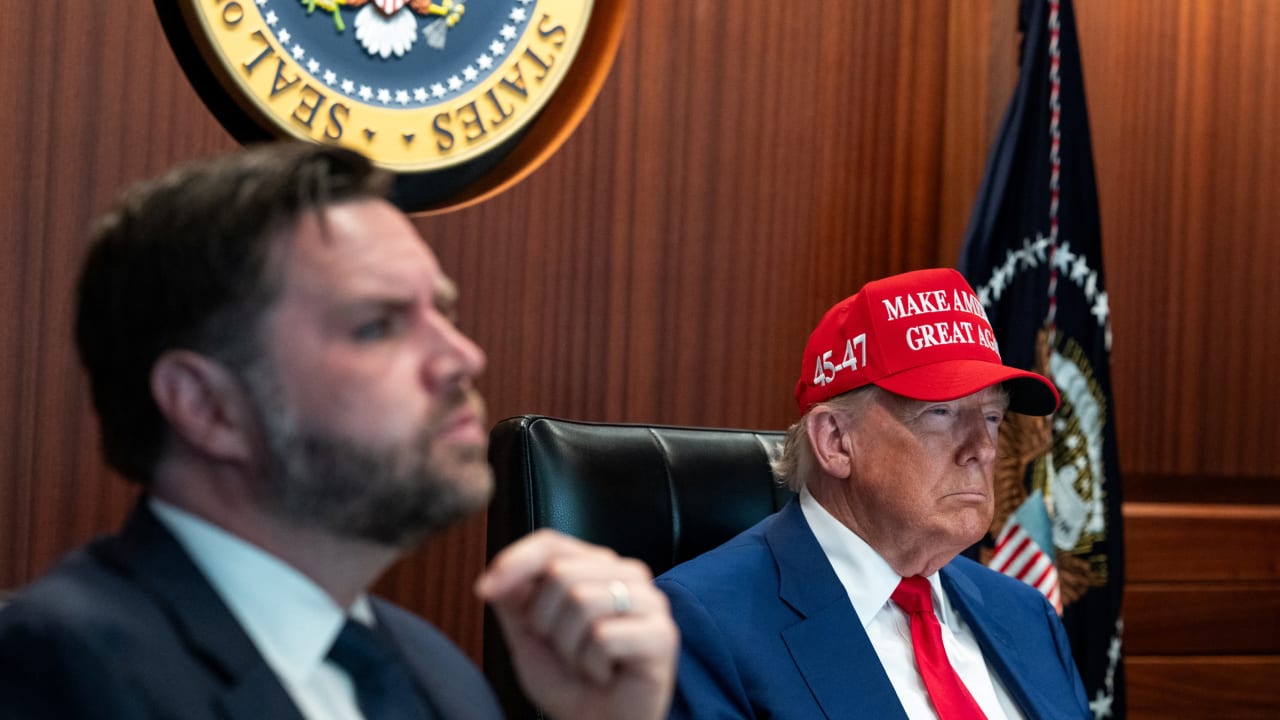
US PRESIDENT Donald Trump holds a meeting, with Vice President J.D. Vance alongside him, in the Situation Room at the White House on Saturday. There should be a swift pivot to negotiations, presenting Tehran with clear and firm terms, says the writer.(photo credit: The White House/Reuters)ByAMICHAI STEINMARCH 25, 2026 08:12
Iran has growing concerns that ongoing negotiations with the United States may be an American ploy rather than a genuine attempt to reach a meaningful agreement, sources told The Jerusalem Post on Wednesday.
“Twice we sat down with Witkoff and Kushner for talks, twice we scheduled another meeting — and instead of a meeting, we got a war. You lied to us,” an Iranian message conveyed to Washington said, according to a source familiar with the details who spoke to the Post.
This skepticism is one of the reasons US Vice President JD Vance has now become involved in the negotiations. Washington has sought to reassure Tehran that “this is not a ploy, but real negotiations.”
Ethnic cleansing, targeting journalists, and Israel controls America | Scratching the Surface
On Tuesday, President Donald Trump told reporters that Iran is engaging seriously with the United States and appears interested in reaching a deal.
“Iran is speaking reasonably. There are no guarantees, but I think maybe we will end the war,” the president said.

What is the US’s 15-point proposal for Iran?
The US administration has presented Tehran with a 15-point proposal and is awaiting a response. The plan, which had in fact been presented to Iran previously, includes the full dismantling of its nuclear program and facilities, a complete halt to uranium enrichment, and limits on ballistic missile range so they would be “for defensive purposes only.”
Advertisement
It also calls for ending Iranian support for proxy groups across the Middle East and ensuring freedom of navigation through the Strait of Hormuz.
In return, Iran would receive full sanctions relief, including the removal of the UN Security Council’s snapback mechanism, which allows sanctions to be reimposed if a member of the agreement claims a violation.
At the same time, Iran has put forward its own demands, including compensation for the war, guarantees against future attacks, the dismantling of US military bases in the Gulf, and a halt to Israeli strikes on Hezbollah in Lebanon.
Israeli officials, along with some American officials who spoke with the Post, assess that given the current positions of both sides, the chances of reaching an agreement remain low.
However, Israeli officials added that “if the Iranians do agree to the 15-point agreement, in the end it would be a good deal for Israel — provided, of course, that Trump insists on all 15 points.”
About The Author
