Trump said to tell confidants he’s working on ‘something much bigger’ in the Middle East after the war with Iran, but plan to only be implemented after US, Israeli elections
By ToI Staff4 September 2026, 11:53 pmUpdated: 5 September 2026, 4:25 am

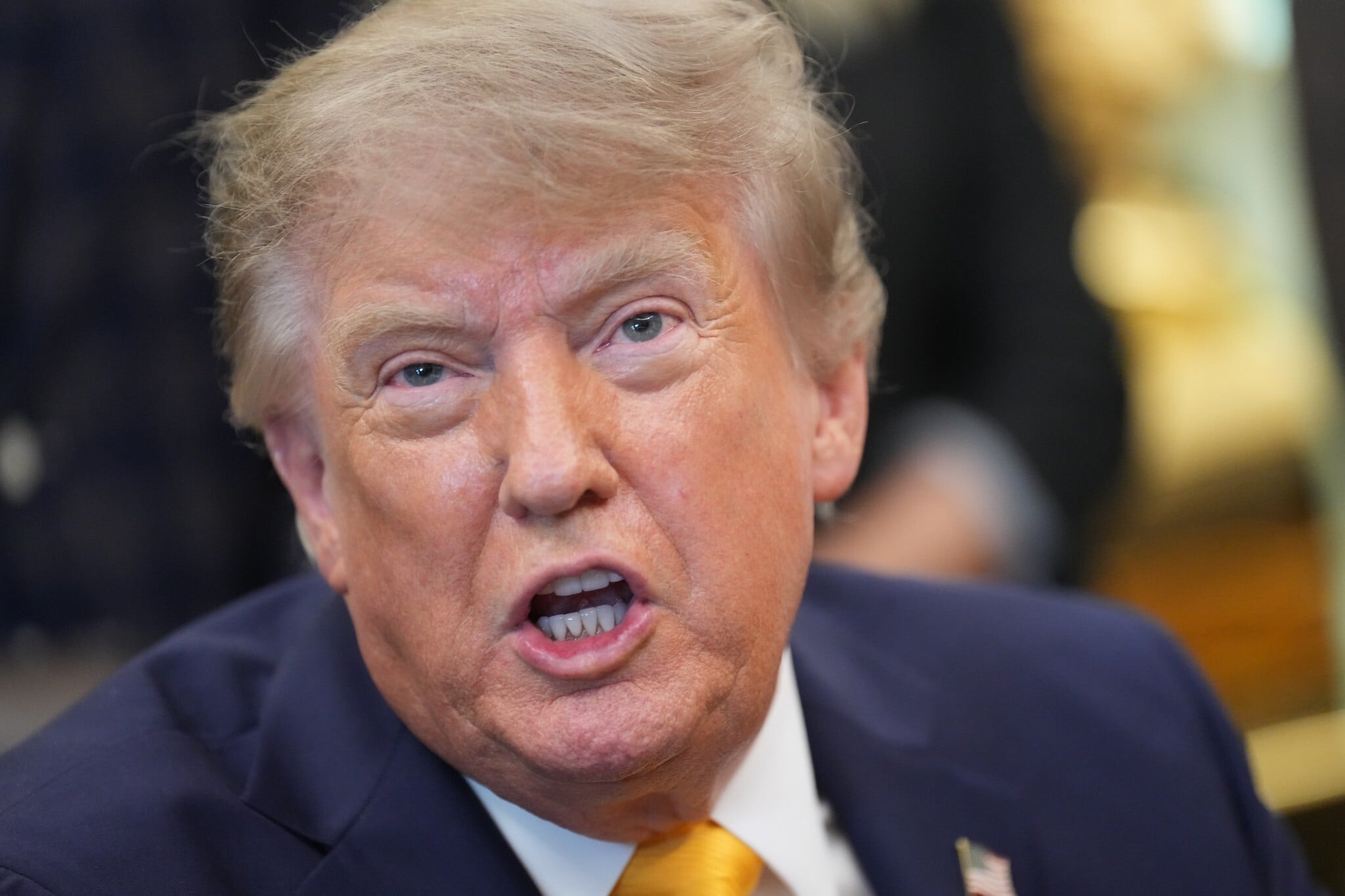
US President Donald Trump speaks September 4, 2026, in the Oval Office of the White House, in Washington. (AP Photo/Jacquelyn Martin)
US President Donald Trump’s administration is crafting a post-Iran war strategy to build a regional alignment of US allies to contain Iran, while also expanding the Abraham Accords, the Axios news site reported on Friday.
The report said that in private conversations, Trump has told people that he’s working on “something much bigger” in the Middle East after the war with Iran.
The plan is still in its initial stages of being formed, and the administration doesn’t plan to implement it until after the October 27 Israeli election and November 3 US midterms, Axios said, citing two US officials and two other sources with knowledge of the matter.
“They are cooking it, but it is not yet cooked,” a source told Axios, adding that it was expected to take another few weeks to finalize the proposal.
Framed as a postwar strategy, the plan ostensibly will require an end to the conflict with Iran, which the US has struggled to achieve on its terms after launching the war with Israel over six months ago.
The plan would see the formation of a regional alliance, with the US serving as a guarantor, a US official told Axios, without elaborating on what that would mean. It would also see a regional effort to implement the Board of Peace’s Hamas disarmament plan in Gaza, which has stalled amid opposition from Prime Minister Benjamin Netanyahu’s government.
The plan envisions a security agreement between Israel and Syria and further implementation of the US-brokered framework agreement between Israel and Lebanon, the report also said.
Both will likely require Israel to withdraw from buffer zones it has established in Syria and Lebanon.
It also envisions expanding the Abraham Accords, including through a long-touted normalization agreement between Israel and Saudi Arabia.

The latter objective will be particularly difficult to achieve, given that Riyadh insists on the establishment of an irreversible pathway to Palestinian statehood — something both Netanyahu and many of his political rivals have ruled out completely.
“The idea is to tie a whole lot of things in the region together — how you create a regional alignment after the war. It is still unclear if all US allies in the region will be on board,” the source told Axios.
While some US officials acknowledged that the results of the upcoming Knesset election will likely impact the chances of the initiative succeeding, they insist that the administration will be moving ahead regardless of who is in power in Jerusalem.
The New York Times meanwhile reported Friday that recent US intelligence reports suggest Iran feels increasingly emboldened and may be reading for a significant escalation, underscoring the difficulty of reaching a deal to formally end the war.
President plays down current conflict with Iran
Trump on Friday said the conflict in Iran was “small potatoes” as he defended Vice President JD Vance for asserting that months of on-and-off attacks in the Middle East are not a “war.”
Asked during an Oval Office exchange about Vance’s comments made a day earlier, Trump noted that US strikes on Iran are now “intermittent” and seemed to downplay the intensity of the war that’s cost US taxpayers more than $37.5 billion and left 18 US service members dead.
“I can understand what he’s saying,” said Trump. He added, “I call it a military conflict because it’s small potatoes for us. It’s not a big thing.”

Vance on Thursday, during a White House press briefing, rejected the use of the word “war” to describe the US fighting with Iran and steered clear of predicting that the six-month-old conflict would be over by November’s midterm elections, in which Republicans are trying to hang on to their narrow majorities in Congress.
“I wouldn’t call it a war,” Vance said after being asked during a White House press briefing about whether the fighting could end before voters cast their ballots in the Nov. 3 congressional elections. “Right now, there is no active shooting.”
Vance’s assertion came even as Iran fired at US Gulf ally Kuwait on Thursday in retaliation for rounds of US strikes on Iran earlier in the week.
Trump, in Friday’s exchange with reporters, added that the US death toll in the Iran conflict is relatively lower than some other recent US wars. The US, along with Israel, has only carried out airstrikes in the Iran war, which began on February 28, and has not deployed troops into the country.
“We did Venezuela and we did this. In Venezuela, we lost nobody,” said Trump, referring to the January US military operation to seize former Venezuelan President Nicolás Maduro and spirit him to New York City to face federal drug trafficking charges. “And this, we lost 18 people. And, in Vietnam we lost 100,000 people. And in other conflicts, we lost tens of thousands of people.”
A total of 58,220 members of the US armed forces died during the Vietnam War, according to records from the US National Archives.
Pressed by a reporter on describing the conflict as “small potatoes” when 18 US service members have been killed, Trump responded by reiterating his argument that the conflict—one that he said at the outset of the war would last a matter of weeks—has led to the defanging of Iran’s nuclear program.
“Iran will not have a nuclear weapon because if they did, you probably wouldn’t be standing here,” Trump said, while warning the US may sstrike Iran’s Pickaxe mountain nuclear site “very soon,” which he has threatened to do for months.
About The Author
