WaPo report says US fired 300 interceptors, including over half its THAADs, while Israel fired 190; US official says even more would be used if war resumes because Israel has sent some missile defense batteries for maintenance
By ToI StaffToday, 2:55 am
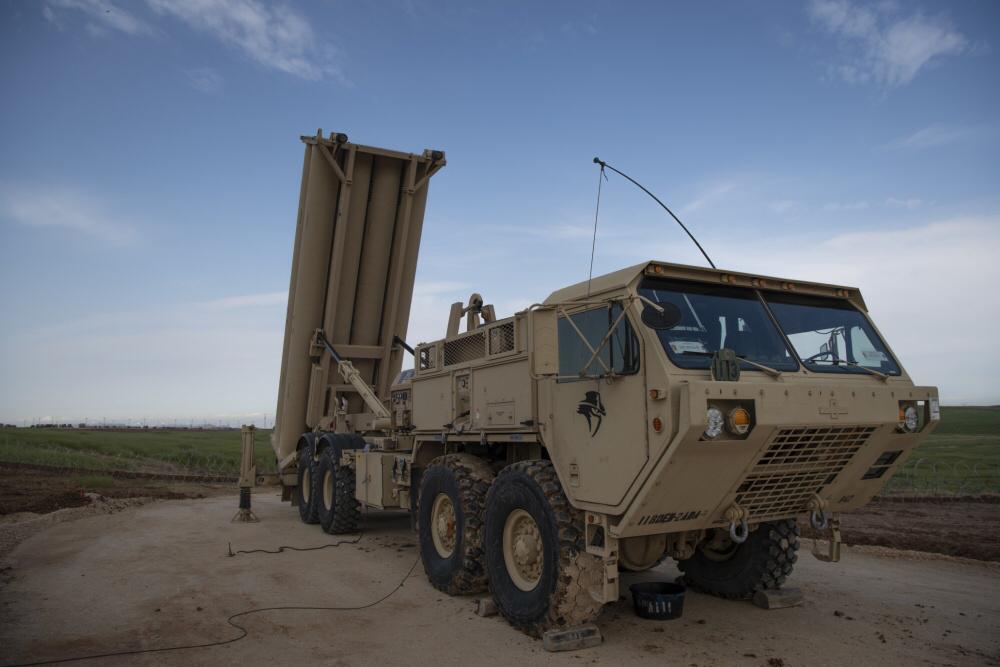
The US military deploys a THAAD missile defense system in Israel, March 2019. (US Army Europe/File)
The US reportedly used up more than half of its inventory of THAAD anti-missile interceptors while defending Israel from Iranian attacks during the recent war.
According to The Washington Post on Thursday, the United States used over 200 THAAD interceptors to shoot down missiles bound for Israel. It also launched more than 100 SM-3 and SM-6 interceptors to defend Israel, which itself used fewer than 100 Arrow interceptors and around 90 from the David Sling’s system, the report said, quoting Defense Department data.
Overall, the report said, the US “expended far more advanced interceptors to protect Israel than Israeli forces did.”
A US official told the newspaper that if fighting renews with Iran, the US will likely need to use even more interceptors defending Israel because Israel has sent some of its missile defense batteries for maintenance.
“Israel is not capable of fighting and winning wars on its own, but nobody actually knows this, because they never see the back end,” said a US official quoted in the report.
The Pentagon denied to The Washington Post that there is any issue of burden sharing with Israel, saying, “Ballistic missile interceptors are just one tool in a vast network of systems and capabilities.”
The Israeli Embassy in Washington said in response that “the US has no other partner with the military willingness, readiness, shared interests and capabilities of Israel.”

Israel has consistently denied claims that it is running low on interceptors, and last month, it approved plans to dramatically accelerate the production of Arrow interceptor missiles.
During the early days of the war, the US also insisted it had enough offensive and defensive munitions after a Post report said it may need to begin conserving interceptors.
Israel has a multi-layered air defense array, with a variety of systems intercepting threats at different altitudes.
The top tier consists of the anti-ballistic missile Arrow systems, with Arrow 2 operating both within the Earth’s atmosphere and in space, and Arrow 3 intercepting above the Earth’s atmosphere.
A single Arrow 3 missile has an estimated price of $2-3 million and takes a few months to produce, although the exact time frame has not been made public by Israel due to security concerns.
The joint US-Israel campaign against Iran, launched on February 28, aimed to degrade the Iranian regime’s military capabilities, distance threats posed by Iran — including its nuclear and ballistic missile programs — and “create the conditions” for the Iranian people to topple the regime, the military and other Israeli leaders have said. A fragile ceasefire came into effect on April 8.

Some 650 ballistic missiles were launched from Iran at Israel during the war, killing 21 Israeli civilians and foreign nationals, along with four Palestinians in the West Bank.
In all, at least 16 missiles carrying conventional warheads with hundreds of kilograms of explosives struck populated areas in Israel, causing extensive damage. There were also more than 50 incidents of missiles carrying cluster bomb warheads hitting populated areas, with hundreds of separate impact sites.
About The Author
